Introduction: Can Wireless Headphones Deliver Audiophile Sound?
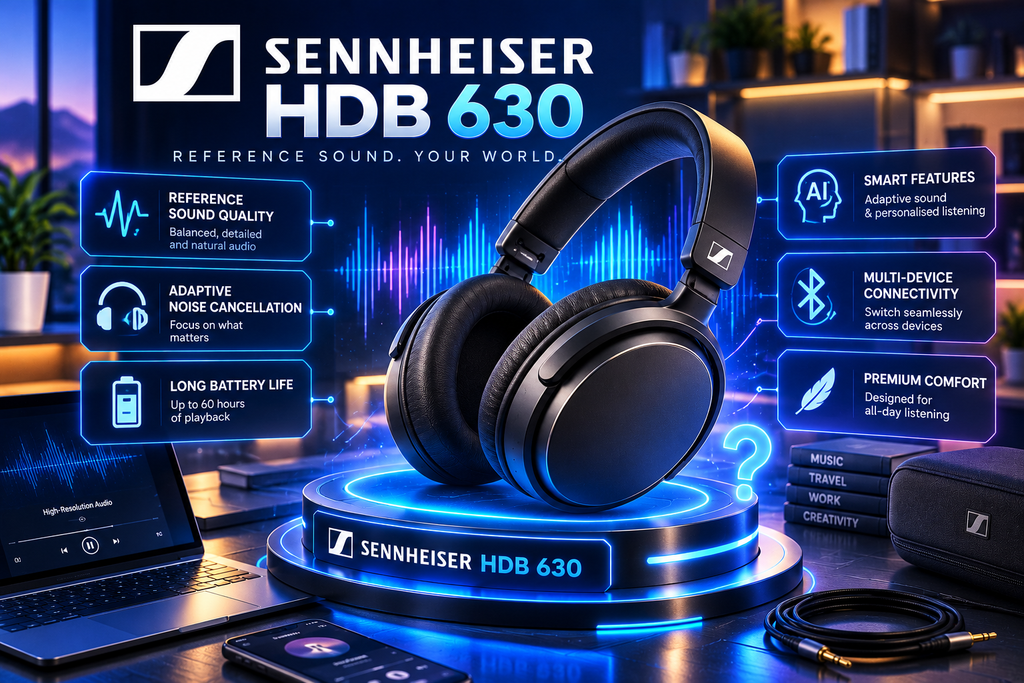
Imagine listening to your favourite song and suddenly noticing a quiet guitar detail, a subtle vocal layer, or an instrument you had never paid attention to before. That is the kind of listening experience premium headphones aim to deliver. The Sennheiser HDB 630 is designed for people who want detailed, balanced sound without giving up the convenience of wireless listening.
Announced in October 2025, these closed-back over-ear headphones combine a 42 mm dynamic driver, adaptive active noise cancellation (ANC), extensive sound customisation, and a bundled USB-C Bluetooth transmitter. They are positioned above everyday wireless headphones, targeting music enthusiasts who care about how their music is reproduced.
But premium features do not automatically make a product right for everyone. Is the HDB 630 worth its price, and how does it compare with the popular Sennheiser MOMENTUM 4 Wireless?
Let’s explore its specifications, sound philosophy, connectivity, battery life, strengths, and limitations using official product information and independent reviews.
Sennheiser HDB 630: Key Specifications
The HDB 630 focuses on sound quality while retaining the practical features expected from modern wireless headphones.
Feature
Sennheiser HDB 630
Design
Closed-back, over-ear
Driver
42 mm dynamic transducer
Weight
311 g without cable
Bluetooth
Bluetooth 5.2
Supported codecs
aptX Adaptive, aptX HD, aptX, AAC, SBC
Audio resolution
Up to 24-bit/96 kHz in supported modes
Battery life
Up to 60 hours at standard resolution
Noise cancellation
Adaptive ANC
Sound customisation
Parametric equaliser and crossfeed
Wired connections
USB-C and 3.5 mm analogue
Included accessory
BTD 700 USB-C Bluetooth transmitter
Water resistance
Not rated as waterproof
India MRP
₹54,990
Official India listing
Promotional price may vary
Specifications are based on the official Sennheiser product page and HDB 630 support documentation. Prices and offers can change.https://pangeeks.com/wp-admin/post.php?post=393&action=edit
- Design and Comfort: Built for Longer Listening Sessions
At first glance, the Sennheiser HDB 630 shares much of its overall design language with the MOMENTUM 4 Wireless. The difference is less about a completely new appearance and more about the acoustic system and listening experience inside.
The headphones use an over-ear design with generously sized earcups and synthetic leatherette materials. At 311 grams without the cable, they are not ultra-lightweight, but their design is intended to support extended listening.
The closed-back construction also helps isolate the listener from the surrounding environment. This is useful when working in a shared office, travelling by train, or enjoying music at home without disturbing others.
However, comfort is personal. Head shape, glasses, ear size, and how tightly the headphones fit can all affect long-term comfort. If possible, try them on before buying, particularly if you plan to wear them throughout the working day.
What stands out: The HDB 630 is designed as a premium daily-listening headphone rather than a bulky, stationary studio headset.
- Sound Quality: A More Neutral Listening Experience
Sound quality is the main reason to consider the Sennheiser HDB 630.
Its 42 mm dynamic transducer is paired with an updated acoustic design, including damping materials and a deeper back volume than the MOMENTUM 4. Sennheiser says these changes are intended to deliver a more neutral presentation.
What does neutral sound mean?
Some headphones boost bass or treble to make music feel more energetic. A neutral tuning aims to keep different parts of the frequency range more balanced, allowing vocals and instruments to sound natural without one element dominating the mix.
With the HDB 630, the intended benefits include:
Bass: Controlled and defined rather than excessively boosted.
Vocals: Clear midrange reproduction that helps voices remain prominent.
Treble: Detailed highs designed to preserve clarity without excessive brightness.
Instrument separation: A presentation intended to make different elements of a recording easier to follow.
This approach can work particularly well for acoustic music, jazz, classical recordings, vocals, and carefully produced albums. Electronic music and hip-hop can also sound enjoyable, although listeners who prefer heavy, powerful bass may want a different tuning.
Independent reviewers have praised the HDB 630 for its detailed and balanced presentation. For example, What Hi-Fi?’s review highlights its natural, dynamic sound and the value of the included transmitter.
Remember that sound remains subjective. Your music library, streaming quality, listening volume, and personal preferences will influence whether this tuning suits you.
- High-Resolution Audio and the BTD 700 Transmitter
One of the most interesting parts of the HDB 630 package is the included BTD 700 USB-C Bluetooth transmitter.
Bluetooth audio quality depends on several factors, including the headphone’s capabilities, the transmitting device, the selected codec, and the source material. Even headphones that support advanced codecs cannot use them if the source device does not support the required connection.
The BTD 700 helps address this compatibility problem by providing a supported route to aptX Adaptive audio from compatible USB-C devices.
The headphones also support USB-C digital audio and a 3.5 mm analogue connection. Sennheiser specifies support for up to 24-bit/96 kHz through supported connection modes.
Why does this matter?
The included transmitter can be especially useful for listeners whose smartphones do not support aptX Adaptive natively. Rather than purchasing a separate compatible transmitter, they can use the accessory supplied with the headphones.
There is one important qualification: high-resolution playback depends on the source, connection, settings, and content. A 24-bit/96 kHz specification does not mean every song automatically plays at that resolution, nor does a higher number guarantee that every listener will hear an improvement.
Sennheiser’s official HDB 630 FAQ explains how to enable Hi-Res mode and check the active signal path.
- Parametric EQ and Crossfeed: More Control Over Your Music
The HDB 630 offers more than preset sound profiles. Its companion Smart Control Plus app includes a parametric equaliser, allowing users to make more targeted adjustments to different frequency ranges.
For example, you could adjust the low frequencies if you want more bass, or refine the midrange to suit vocal-heavy music. This flexibility is useful for listeners who know what they like and want more control than a basic bass or treble slider provides.
Another notable feature is crossfeed.
In some older stereo recordings, instruments are mixed heavily to the left or right channel. Crossfeed blends a controlled amount of information between channels, potentially making these recordings feel more natural and less extreme in their stereo placement.
It will not transform every track, and some listeners may prefer the original stereo effect. Still, it is a valuable option for people who enjoy experimenting with sound.
The practical advantage: The HDB 630 gives listeners a neutral starting point while providing tools to personalise the result.
- Active Noise Cancellation: Focus Without Switching Off the World
Premium wireless headphones are expected to reduce background noise, and the HDB 630 includes adaptive active noise cancellation.
ANC uses microphones and electronic processing to reduce unwanted environmental sound. It is particularly useful against relatively continuous, low-frequency noise, such as the hum of an aircraft cabin, an air conditioner, or a train.
The headphones also provide transparency mode, which allows ambient sound to pass through when you need to hear announcements or speak to someone without removing the earcups.
Independent testing suggests that noise cancellation is useful for commuting and office work, although it is not necessarily the strongest option for every type of noise. RTINGS’ HDB 630 review notes strengths in sound quality and noise cancellation, while also identifying limitations with low-bass noise and fit consistency.
No ANC system completely removes every sound. Nearby conversations, sudden noises, and some higher-frequency sounds may remain audible.
For safety, stay aware of traffic and other hazards when using headphones outdoors.
- Battery Life: Up to 60 Hours
Battery life is another major selling point. Sennheiser advertises up to 60 hours of operation at standard resolution.
That is enough for several days of ordinary listening for many users, reducing the need to charge the headphones after every trip or work session.
There is an important detail, however: using high-resolution aptX Adaptive at 24-bit/96 kHz with the BTD 700 can reduce the stated runtime to approximately 45 hours, according to Sennheiser’s FAQ.
Listening setup
Advertised battery life
Standard-resolution operation
Up to 60 hours
Hi-Res aptX Adaptive at 24-bit/96 kHz
Up to 45 hours
Quick charge
Up to 7 hours from 10 minutes, according to launch information
Actual runtime can vary with volume, settings, connectivity, and usage. The quick-charge figure is a manufacturer claim rather than a guarantee for every situation.
For frequent travellers and people who listen for hours each day, the battery capacity is a meaningful practical benefit.
- Sennheiser HDB 630 vs MOMENTUM 4 Wireless
The MOMENTUM 4 Wireless is an important comparison because the two models share a similar overall design but target different priorities.
Feature
HDB 630
MOMENTUM 4 Wireless
Sound signature
More neutral and balanced
Warmer with stronger bass emphasis
Driver tuning
Customised for reference-style listening
Tuned for engaging everyday listening
Parametric EQ
Yes
Basic EQ options
Included BTD 700 transmitter
Yes
No
Battery life
Up to 60 hours at standard resolution
Up to 60 hours
Overall positioning
Premium, enthusiast-focused
More value-oriented all-rounder
The comparison is supported by RTINGS’ direct comparison.
Choose the HDB 630 if you value a more balanced sound, detailed customisation, and the bundled Bluetooth transmitter. Consider the MOMENTUM 4 if you prefer a warmer, bass-forward presentation and find it at a substantially lower price.
The HDB 630 is not simply a replacement for the MOMENTUM 4. It is a more specialised option for people who prioritise tuning and connectivity flexibility.
- Price in India: Is It Worth the Money?
The HDB 630 carries an official Indian maximum retail price of ₹54,990. At the time of checking, Sennheiser India’s product listing displayed a promotional price of approximately ₹41,490, with additional card offers potentially available. Check the official India store for the current price before purchasing.
At this price level, buyers should consider how they will actually use the headphones.
The HDB 630 makes the most sense if you regularly listen to high-quality music, appreciate balanced sound, want adjustable audio, and expect to use the included transmitter. Its value is less obvious if you mainly listen to compressed audio at casual volumes or simply want the strongest possible noise cancellation.
Also remember that the headphones are not rated as waterproof or as sports headphones. They are better suited to everyday listening, travel, and work than sweaty workouts or rainy outdoor activities.
Pros and Cons
Pros
Detailed, balanced sound aimed at serious music listeners.
Parametric EQ and crossfeed for sound customisation.
Included BTD 700 Bluetooth transmitter.
USB-C and analogue wired listening options.
Long advertised battery life.
Adaptive ANC and transparency mode.
Carrying case and useful travel accessories included.
Cons
Premium pricing, even when discounted.
Neutral tuning may feel less exciting to bass lovers.
High-resolution Bluetooth playback can reduce battery life.
ANC performance varies with the type of surrounding noise and the fit.
No waterproof rating for workouts or wet conditions.
Frequently Asked Questions
Is the Sennheiser HDB 630 good for audiophiles?
It is designed with audiophile listening in mind, particularly for people who prefer balanced sound, detailed reproduction, and fine control over their audio.
Does the Sennheiser HDB 630 support lossless audio?
It supports up to 24-bit/96 kHz through supported USB-C, analogue, and BTD 700 Bluetooth transmitter modes. The actual signal quality depends on the source and connection.
How long does the HDB 630 battery last?
Sennheiser advertises up to 60 hours at standard resolution. Hi-Res aptX Adaptive operation at 24-bit/96 kHz can reduce the stated runtime to around 45 hours.
Is the HDB 630 waterproof?
No waterproof rating is specified. It is not intended to be a waterproof or dedicated sports headphone.
Should you buy the HDB 630 or MOMENTUM 4?
Choose the HDB 630 for its more neutral tuning, parametric EQ, and included transmitter. Choose the MOMENTUM 4 if you prefer stronger bass emphasis and can get it at a significantly lower price.
Conclusion: Should You Buy the Sennheiser HDB 630?
The Sennheiser HDB 630 is an appealing premium headphone for listeners who want more than convenience and noise cancellation. Its strongest selling points are its balanced sound philosophy, parametric EQ, crossfeed, multiple connection options, long battery life, and bundled BTD 700 transmitter.
It is not automatically the best choice for every listener. Bass-focused music fans may prefer a warmer tuning, while travellers whose main priority is maximum noise cancellation should compare it with competing premium models before deciding.
Our verdict: The HDB 630 is worth considering if sound quality and listening control are your top priorities and the price fits your budget. For casual listening, the less expensive MOMENTUM 4 Wireless may offer better value.
What do you think?
Would you choose the Sennheiser HDB 630 for its balanced sound and high-resolution connectivity, or would you prefer a more affordable wireless headphone? Share your opinion in the comments, and explore our other technology articles for more headphone comparisons and buying guides.