Introduction: Why Does the Nothing Phone Stand Out?
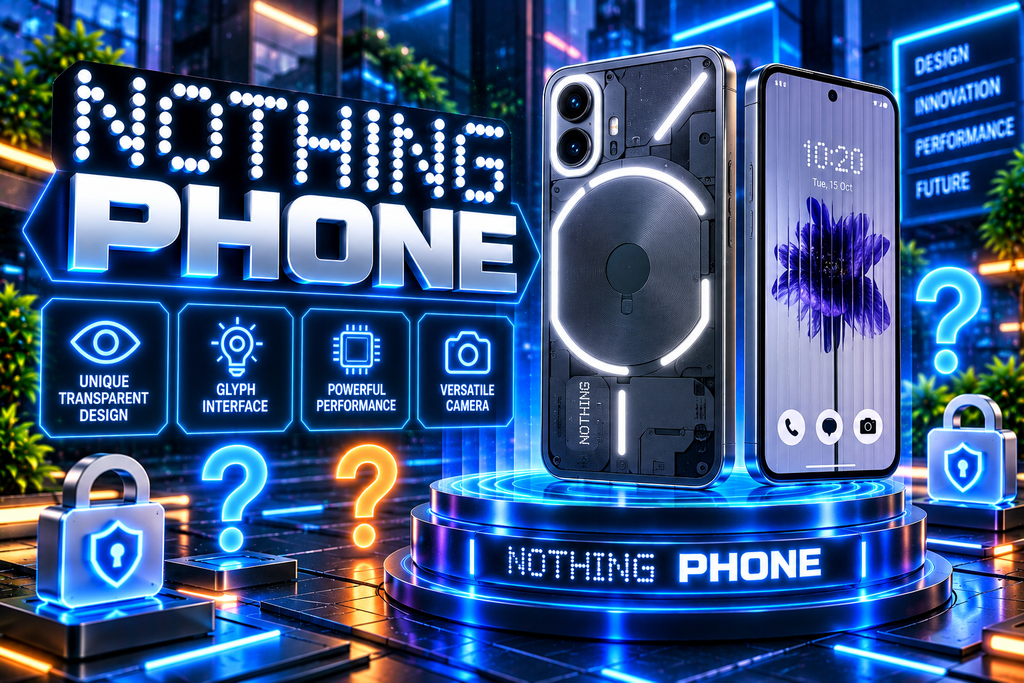
Walk into a smartphone shop today and you will see plenty of devices with large displays, multiple cameras, and powerful processors. Many look remarkably similar. But one brand has built its identity around doing things a little differently: Nothing.
The Nothing Phone stands out through its transparent-inspired design, distinctive Glyph lighting, and software that aims to feel clean rather than cluttered. Instead of competing only through specifications, Nothing tries to make the smartphone experience more expressive and personal.
That approach has helped the brand attract people who want a phone that looks different without sacrificing everyday functionality.
In 2026, the lineup includes the Nothing Phone (4a), Phone (4a) Pro, Phone (4b), and Phone (3). Each targets a different balance of price, performance, cameras, and design. The company has also continued developing its software, including new AI-powered features and the Nothing OS experience.
But is a Nothing Phone actually worth buying, or is its unique appearance doing most of the work? Let’s explore its design, features, performance, cameras, pricing, and the key things to consider before purchasing one.https://pangeeks.com/wp-admin/post.php?post=543&action
- Nothing Phone Design: More Than Just a Transparent Back
One of Nothing’s strongest advantages is its visual identity.
Many Nothing smartphones use a transparent-inspired rear design that reveals a carefully arranged pattern of internal-looking components. The actual electronics remain protected, but the presentation makes the phone feel more mechanical and distinctive than a conventional glass-backed device.
The company’s design philosophy is not just about transparency. It also uses geometric shapes, carefully placed screws and visual details, monochrome interface elements, and lighting to create a recognisable style.
What Is the Glyph Interface?
The Glyph Interface is one of the brand’s signature features. Depending on the model, it uses lights on the back of the phone to provide visual notifications and other information.
These lights can help users recognise certain calls or alerts without immediately turning the phone face-up. Some models also offer features such as progress indicators and custom lighting patterns.
The newer Phone (4a) series uses a Glyph Bar-style lighting arrangement rather than simply repeating the design of earlier models.
The practical benefit is that the lights can make notifications more noticeable while allowing the screen to remain off. However, not every user will find them essential, and their usefulness depends on how notifications are configured.
The main takeaway: Nothing’s design is more than a marketing detail, but it should complement good performance and battery life—not replace them.
- Nothing Phone Features and Specifications: What Do You Get?
Nothing’s phones cover several price categories, so there is no single specification sheet that applies to every model.
The table below provides a high-level overview of the current lineup in India.
Model
Positioning
Main appeal
Nothing Phone (4b)
More accessible model
Distinctive design and everyday performance
Nothing Phone (4a)
Mid-range all-rounder
Camera versatility and Glyph design
Nothing Phone (4a) Pro
Higher-tier mid-range
More premium hardware and design
Nothing Phone (3)
Previous-generation flagship
Higher-end performance and a telephoto camera
The lineup is listed on Nothing’s official Indian smartphone page. Specifications and pricing can vary by storage configuration, retailer, and promotional offer.
Before buying, check the exact model rather than assuming every Nothing Phone includes the same display, camera system, charging speed, or Glyph features.
- Display Quality: Built for Everyday Entertainment
The display is one of the most important parts of any smartphone. It affects everything from reading messages and browsing websites to watching videos and playing games.
Nothing’s recent phones use modern display technology, with AMOLED panels and high refresh rates available across much of the range. The exact size, brightness, resolution, and refresh rate depend on the model.
Why Does a High Refresh Rate Matter?
A display refresh rate measures how many times the screen updates per second. A 120Hz display, for example, can refresh up to 120 times per second.
Compared with a traditional 60Hz display, a higher refresh rate can make scrolling and supported animations appear smoother. It can also improve the feeling of responsiveness in compatible games.
However, refresh rate is only one part of display quality. Brightness, colour accuracy, outdoor visibility, and touch response matter just as much.
If you spend hours watching videos, reading articles, or using social media, look at independent reviews of the specific model you are considering rather than relying only on headline specifications.
- Nothing Phone Camera: Can It Take Good Photos?
Camera performance is an important reason to choose one smartphone over another. Nothing has gradually expanded its camera offerings, particularly in the mid-range category.
The Phone (4a), for example, includes a three-camera system and a periscope telephoto camera with 3.5x optical zoom, according to published reviews and specifications. This gives users more flexibility for portraits and distant subjects than a phone with only a main and ultrawide camera.
You can read the official Nothing Phone (4a) product information for the advertised camera features.
What Should You Expect From the Camera?
A versatile camera system can help with several types of photography:
Main camera: Everyday photos, landscapes, food, and family pictures.
Ultrawide camera: Group photos and scenes where you want to capture more of the surroundings.
Telephoto camera: Portraits and subjects farther away, depending on the model.
Front camera: Selfies, video calls, and social media content.
The Phone (4a) received positive attention for its telephoto camera in several reviews. However, reviewers have also identified limitations, including inconsistency between lenses and weaknesses in certain camera situations.
That is an important reminder: a phone with several cameras does not automatically produce excellent results in every situation. Image processing, lighting, stabilisation, and sensor quality still matter.
If photography is your priority, compare real sample images and low-light tests before deciding.
- Performance and Gaming: Is a Nothing Phone Powerful Enough?
Nothing uses different processors across its lineup, matching hardware to the intended price category.
The more accessible models are designed for everyday tasks such as messaging, video streaming, browsing, and casual gaming. More expensive models offer stronger hardware for demanding applications and multitasking.
The Phone (3), for example, uses a Snapdragon 8s Gen 4 processor and includes a telephoto camera, according to long-term reviews. It offers a more premium hardware package than the brand’s entry-level options.
What About Heavy Gaming?
For games such as BGMI, Call of Duty: Mobile, or similar titles, performance depends on the exact processor, graphics settings, thermal management, and software optimisation.
Before buying a phone for gaming, look for reviews that test:
Frame-rate stability during long sessions.
Heat after 30–60 minutes of play.
Battery drain while gaming.
Performance at higher graphics settings.
Touch response and network stability.
A phone can feel fast during everyday use but still struggle to maintain maximum gaming performance for extended periods. Independent testing is therefore more valuable than benchmark scores alone.
- Nothing OS: Clean Software With a Distinctive Personality
Hardware is only half of the smartphone experience. The software affects how quickly you can find settings, manage notifications, customise the interface, and move between applications.
Nothing OS uses a distinctive visual style, including minimalist design elements, custom widgets, and interface choices intended to reduce visual clutter. The company has also introduced AI-oriented tools intended to help users manage information and personalise their phones.
In October 2026, Nothing began the stable rollout of Nothing OS 5.0, based on Android 17, for the Phone (3). The rollout is staged, and other supported models are expected to receive updates on their own schedules. Check the latest update coverage before assuming the update is available on your device.
Why Software Support Matters
A smartphone is a long-term purchase. It is worth checking the promised operating-system upgrades and security-update period before spending your money.
Also remember that new software features do not necessarily arrive on every model at the same time. Some functions may require newer hardware, while others may appear only after a staged update.
For buyers, the ideal combination is a clean interface, reliable updates, good battery management, and few unnecessary applications.
- Battery Life and Charging: What Should Buyers Know?
Battery capacity and charging speeds differ between Nothing models.
A larger battery can provide more endurance, but actual battery life also depends on display brightness, signal strength, gaming, camera use, and background applications.
If you are a heavy user, look for reviews that include a full day of mixed usage rather than relying solely on the advertised battery capacity.
Fast charging can be convenient, especially if you frequently top up your phone during the day. However, the maximum advertised charging speed may require a compatible charger, and charging usually slows as the battery approaches full capacity.
Before purchasing, confirm whether a suitable charger is included and check the phone’s supported charging standard.
- Nothing Phone Price in India: Which Model Fits Your Budget?
Nothing’s pricing varies by model, memory configuration, and retailer. Prices can also change after launch because of promotions, supply costs, and stock availability.
For that reason, it is better to check current prices directly rather than rely on a single figure that may quickly become outdated.
Model
Best suited for
What to compare
Phone (4b)
Buyers seeking the brand’s design at a lower price
Processor, cameras, software support
Phone (4a)
People wanting a balanced mid-range phone
Telephoto camera, battery, display
Phone (4a) Pro
Buyers wanting a more premium mid-range experience
Build, performance, camera differences
Phone (3)
Users interested in a previous-generation flagship
Current street price, update support, camera features
Check Nothing India and reputable retailers for the latest prices, availability, and warranty details.
Do not assume the most expensive model is automatically the best value. A less expensive phone may be sufficient if you mainly use messaging, social media, photography, and streaming.
- Nothing Phone Comparison: Which One Should You Choose?
The best model depends on how you use your phone.
Choose the Phone (4b) if your priority is getting the Nothing design language and Glyph experience at a more accessible price. Make sure its camera and performance capabilities match your needs.
Choose the Phone (4a) if you want a balanced phone with a versatile camera setup. Its telephoto camera is particularly relevant if you often take portraits or photograph subjects at a distance.
Consider the Phone (4a) Pro if you want a higher-tier mid-range device. Compare its actual upgrades with the standard 4a before paying more.
Consider the Phone (3) if you want stronger flagship-oriented hardware and a telephoto camera. Because it is an older flagship, its current selling price is especially important to the value calculation.
Advantages and Disadvantages
Advantages
Potential drawbacks
Distinctive design
The transparent-inspired style is not for everyone
Glyph lighting adds personality
Some users may rarely use the lights
Clean and recognisable software
Software features vary by model
Camera versatility on selected models
Camera quality is not equally strong across all models
Multiple price categories
Choosing the right model requires careful comparison
- Who Should Buy a Nothing Phone?
A Nothing Phone could be a good choice if you value design, a distinctive Android interface, and features that make your phone feel different from the competition.
It may particularly suit:
Students who want a stylish everyday smartphone.
Content creators who appreciate a versatile camera system.
Android users who prefer a cleaner software experience.
Buyers who want a phone that looks distinctive without relying on a conventional luxury design.
However, it may not be the best choice for everyone. If you prioritise the strongest gaming performance, the longest battery life, or the best possible camera at a given price, compare competing models carefully.
The most useful question is not whether Nothing is an interesting brand. It is whether the specific phone offers the features you will use every day.