Introduction: A Wireless Microphone That Shows Your Style
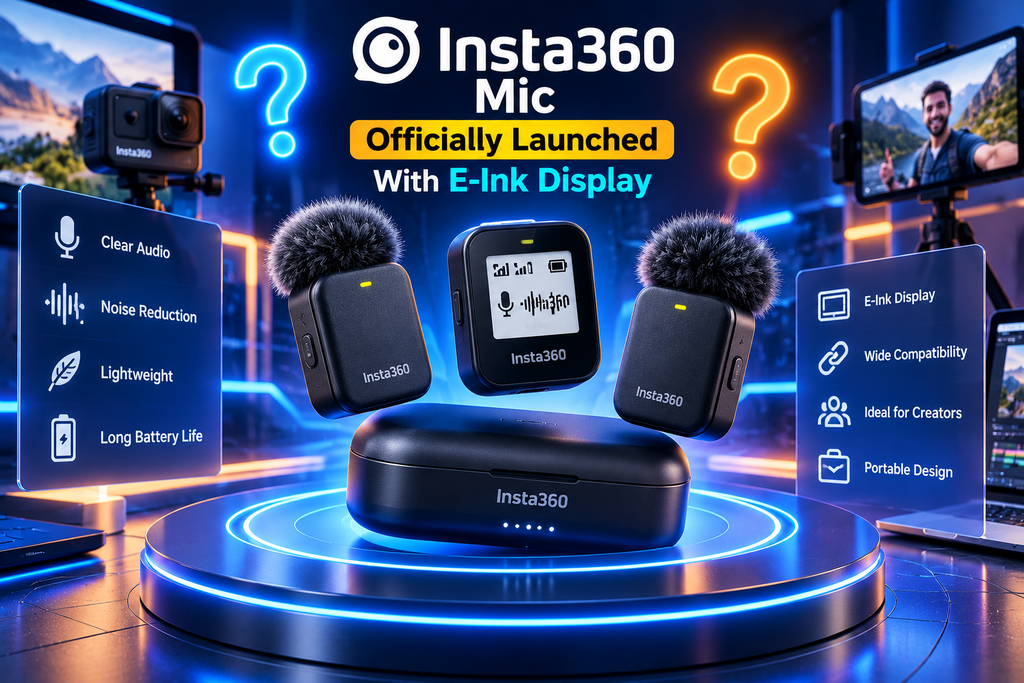
What if your wireless microphone could display your YouTube logo, your name, or even a custom image while recording? That is one of the most interesting ideas behind the new Insta360 Mic.
Insta360 Mic Officially Launched With E-Ink Display, bringing a customizable screen, AI-powered noise cancellation, expandable storage, and internal audio recording to a wireless microphone designed for everyday content creators.
Announced on October 22, 2026, the new microphone sits between Insta360’s entry-level Mic Air and its flagship Mic Pro. Its goal is straightforward: give vloggers, streamers, interviewers, and video creators more recording flexibility without requiring them to buy the company’s most expensive microphone system.
PR Newswire
+1
But the E-Ink display is only part of the story. The microphone also supports microSD cards for internal recording, 32-bit float audio, AI noise cancellation, and direct Bluetooth connections with selected Insta360 cameras.https://pangeeks.com/wp-admin/post.php?post=583&action
These features could make it an appealing upgrade for creators who record in unpredictable environments. Let’s explore the specifications, pricing, key advantages, limitations, and how it compares with other wireless microphone systems.
- Insta360 Mic: Key Specifications at a Glance
PRODUCT OVERVIEW
Insta360 Mic
Wireless microphone system for content creators
Customizable E-Ink display
AI noise cancellation
Optional microSD recording
Up to 13 hours per transmitter
Up to four transmitters per receiver
The Insta360 Mic is designed to make wireless audio recording more flexible. Here are the main specifications confirmed by the company.
Feature Insta360 Mic
Display Customizable, six-color E-Ink
Display size 1.22 inches
Display resolution 240 × 208 pixels
Internal recording Yes, with a microSD card
Audio format 24-bit and 32-bit float internal recording
Noise reduction AI-powered noise cancellation
Battery life Up to 13 hours per transmitter
Total battery life Up to 34 hours with charging case
Wireless range Up to 400 metres under specified conditions
Multi-microphone support Up to four transmitters per receiver
Launch date October 22, 2026
Specifications are based on Insta360’s official product information and published launch details. Actual performance depends on the recording configuration and operating conditions.
Advanced E-Ink Wireless Microphone
+2
- Customizable E-Ink Display: The Standout Feature
Most wireless microphones have a plain exterior with a logo or a small status indicator. The Insta360 Mic takes a different approach by allowing users to customize the E-Ink display on the transmitter.
You can upload a graphic, such as:
- Your YouTube channel logo.
- Your personal brand or business identity.
- A guest’s name during an interview.
- An emoji or a simple graphic.
- A recognizable label for different speakers.
This might sound like a cosmetic feature, but it has practical applications.
Imagine recording a two-person interview with both speakers wearing microphones. Personalized screens can help identify which transmitter belongs to which person. For a branded video, the display can also make the equipment feel more consistent with the creator’s visual identity.
Why use E-Ink instead of a conventional screen?
E-Ink technology is designed to display static images using very little power between screen refreshes. That makes it a sensible choice for a microphone that may spend hours displaying the same logo or image.
It also gives the product a distinctive look without requiring a bright screen to remain active throughout a recording session.
The feature is particularly useful for interviewers, event videographers, and creators who regularly record multiple people. It will not improve sound quality by itself, but it can make the recording setup easier to organize.
You can learn how to personalize the display in Insta360’s official E-Ink display guide.
Insta360 Online Manual
+1
- AI Noise Cancellation for Cleaner Voice Recording
Background noise is one of the biggest challenges for anyone recording video outside a controlled studio.
Traffic, fans, crowds, wind, and conversations can make spoken audio difficult to understand. A video may look excellent, but distracting background noise can quickly reduce its overall quality.
The Insta360 Mic uses a dedicated AI audio-processing chip to power its noise-cancellation system. The objective is to reduce unwanted sounds while keeping the speaker’s voice clear and natural.
Insta360
+1
Where could it help?
- Travel vlogging: Reduce distractions when filming in busy public places.
- Street interviews: Make speech easier to hear against surrounding conversations.
- Outdoor videos: Help control some background noise when recording outside.
- Online meetings: Improve voice clarity in less-than-perfect recording environments.
- Daily content creation: Reduce the need to find a completely silent location.
However, AI noise cancellation is not magic. Strong wind, sudden loud sounds, and extremely noisy environments can still affect the recording. A furry windscreen, good microphone placement, and sensible recording levels remain important.
For the best results, creators should test the noise-cancellation setting before an important shoot rather than assuming that software will fix every audio problem.
4. microSD Storage and 32-Bit Float Recording
One of the most useful features of the Insta360 Mic is its microSD card slot. Instead of relying exclusively on audio captured by a connected phone or camera, users can record audio directly on the transmitter when a compatible card is inserted.
This provides an additional layer of protection when filming interviews, travel videos, or other moments that cannot easily be recreated.
What is 32-bit float audio?
In simple terms, 32-bit float recording provides substantial flexibility when adjusting audio levels during editing. It can help recover recordings that would be difficult to work with if they had been captured at unsuitable levels.
For example, imagine interviewing someone who suddenly laughs loudly after speaking quietly. If the recording has enough usable headroom and the signal has not been irreversibly clipped, you may be able to adjust the louder section more effectively during post-production.
There is an important technical distinction: 32-bit float does not magically repair every distorted recording. If the microphone’s analogue input stage itself clips, that distortion may remain. The main advantage is greater flexibility in the digital recording and editing workflow.
The Insta360 Mic supports 24-bit and 32-bit float internal recording when a microSD card is inserted. Without a card, it can still send audio through a compatible Bluetooth connection or receiver.
Advanced E-Ink Wireless Microphone
+1
Why this matters for creators
Internal recording can be valuable when:
- A wireless connection becomes unreliable.
- A camera’s audio track needs a backup.
- You are filming an important interview.
- You want more flexibility when balancing voice levels during editing.
Remember to purchase a compatible microSD card separately if your chosen bundle does not include one. Check the official manual for supported cards and recording settings before buying.
- Battery Life: Up to 34 Hours With the Charging Case
Battery life can determine whether a wireless microphone is suitable for a full day of recording.
Insta360 rates the Mic transmitter for up to 13 hours of use on a single charge, with up to 34 hours available when the charging case is included. These are maximum advertised figures, not a guarantee of identical runtime under every condition.
Insta360
+1
For a creator who records several short videos throughout the day, that capacity could reduce the need to recharge between shoots.
It could also help travel vloggers and event videographers who spend long periods away from a power outlet.
Actual battery life may vary with recording settings, wireless use, noise cancellation, and other operating conditions. As with any rechargeable device, charging habits and battery ageing can affect long-term performance.
6. Connectivity: Cameras, Smartphones and Multi-Person Recording
A wireless microphone becomes much more useful when it fits naturally into a creator’s existing equipment.
The Insta360 Mic supports conventional receiver-based recording with compatible smartphones, DSLR cameras, and mirrorless cameras. Insta360 also offers Direct Connect, which allows the transmitter to connect directly by Bluetooth to selected Insta360 cameras without a separate receiver.
Compatible models listed by the company include the X6, X5, Luna Ultra, Luna Pro, GO Ultra, and Ace Pro 2. The X6 and Luna models support connecting two transmitters simultaneously through the stated Direct Connect workflow. Compatibility can depend on device firmware and configuration.
Insta360
+1
Recording more than one person
The receiver can support up to four transmitters, making the system useful for group discussions, interviews, and podcasts.
Another notable detail is cross-generation compatibility: Insta360 says Mic and Mic Pro transmitters can be mixed on the same receiver.
For creators who already own compatible equipment, that could reduce the need to replace an entire microphone setup when adding more speakers.
For multi-camera production, the company also describes a mode in which two transmitters can send synchronized audio to as many as four receivers. Check the supported configuration and connection requirements before planning a professional shoot.
Insta360
+1
- Insta360 Mic vs Insta360 Mic Pro vs Mic Air
The new model joins two existing products in Insta360’s wireless microphone lineup. Each is intended for a different level of recording needs.
Feature Mic Air Insta360 Mic Mic Pro
Positioning Entry-level Advanced mid-range Flagship
Customizable E-Ink display No Yes Yes
Internal recording Depends on configuration microSD supported Built-in storage
32-bit float internal recording Not a defining feature Supported Supported
Noise cancellation Varies by model AI-powered Advanced AI processing
Multi-transmitter workflow Depends on system Up to four transmitters per receiver Advanced multi-mic features
Best suited for Simple everyday recording Vlogging, interviews and versatile creator workflows More demanding audio production
This is a high-level comparison, not a complete specification sheet. Consult the official Insta360 microphone lineup for model-specific details.
Insta360
+2
What does the Mic Pro do differently?
The Mic Pro includes a three-microphone array and built-in 32GB storage, while the Insta360 Mic uses a single omnidirectional microphone and expandable microSD storage. The Pro’s more advanced microphone hardware and recording options may make it better suited to creators who need greater control over audio capture.
The standard Mic’s advantage is its more accessible pricing and replaceable storage. For everyday vlogging and interviews, those trade-offs may be worthwhile.
The Verge
+1
The best option depends on your workflow, not simply which product has the word “Pro” in its name.
8. Insta360 Mic Price and Availability
The Insta360 Mic launched globally on October 22, 2026, through the company’s official store, Amazon, and authorized retailers.
PR Newswire
+1
The announced US prices are:
Single kit
1 transmitter + 1 receiver
$139.99
Dual kit
2 transmitters + 1 receiver + charging case
$249.99
Additional transmitter
Single transmitter
$79.99
US launch prices. Taxes, shipping, bundle contents and local prices may vary.
For Indian buyers, check the official Insta360 store for current regional pricing and availability. Do not assume a direct conversion from US dollars will equal the final Indian retail price.
9. Is the Insta360 Mic Worth Buying?
The Insta360 Mic looks most appealing to creators who want a versatile wireless microphone rather than a basic plug-and-play audio accessory.
Its biggest strengths are:
- A customizable E-Ink display for personal branding and speaker identification.
- AI-powered noise cancellation for challenging recording environments.
- Optional internal recording with 32-bit float support.
- Long advertised battery life.
- Flexible connectivity and support for multi-person recordings.
- Expandable storage instead of relying exclusively on built-in memory.
There are also a few considerations before buying.
The microSD card is an additional purchase if it is not included in the bundle. The single omnidirectional microphone does not offer the same hardware configuration as the Mic Pro’s three-microphone array. And features such as noise cancellation should be judged through real-world testing rather than marketing claims alone.
For someone starting a YouTube channel, making product-review videos, recording interviews, or producing travel content, the Insta360 Mic could be a practical all-rounder. Professional filmmakers who need specialized pickup patterns or more advanced recording control may prefer a higher-end system.
Conclusion
The Insta360 Mic officially launched with an E-Ink display, but its appeal goes beyond its distinctive appearance. Optional internal recording, 32-bit float audio, AI noise cancellation, flexible connectivity, and up to 34 hours of advertised battery life make it an interesting option for modern content creators.
Its position between the Mic Air and Mic Pro could also make it attractive to buyers who want advanced features without paying for every capability offered by a flagship system.
The real question is whether its audio quality, reliability, and usability meet your needs. The E-Ink display is a clever extra, but reliable sound and a smooth recording workflow are what ultimately make a microphone worth owning.